⛴️ Travelling by Ferry in Greece
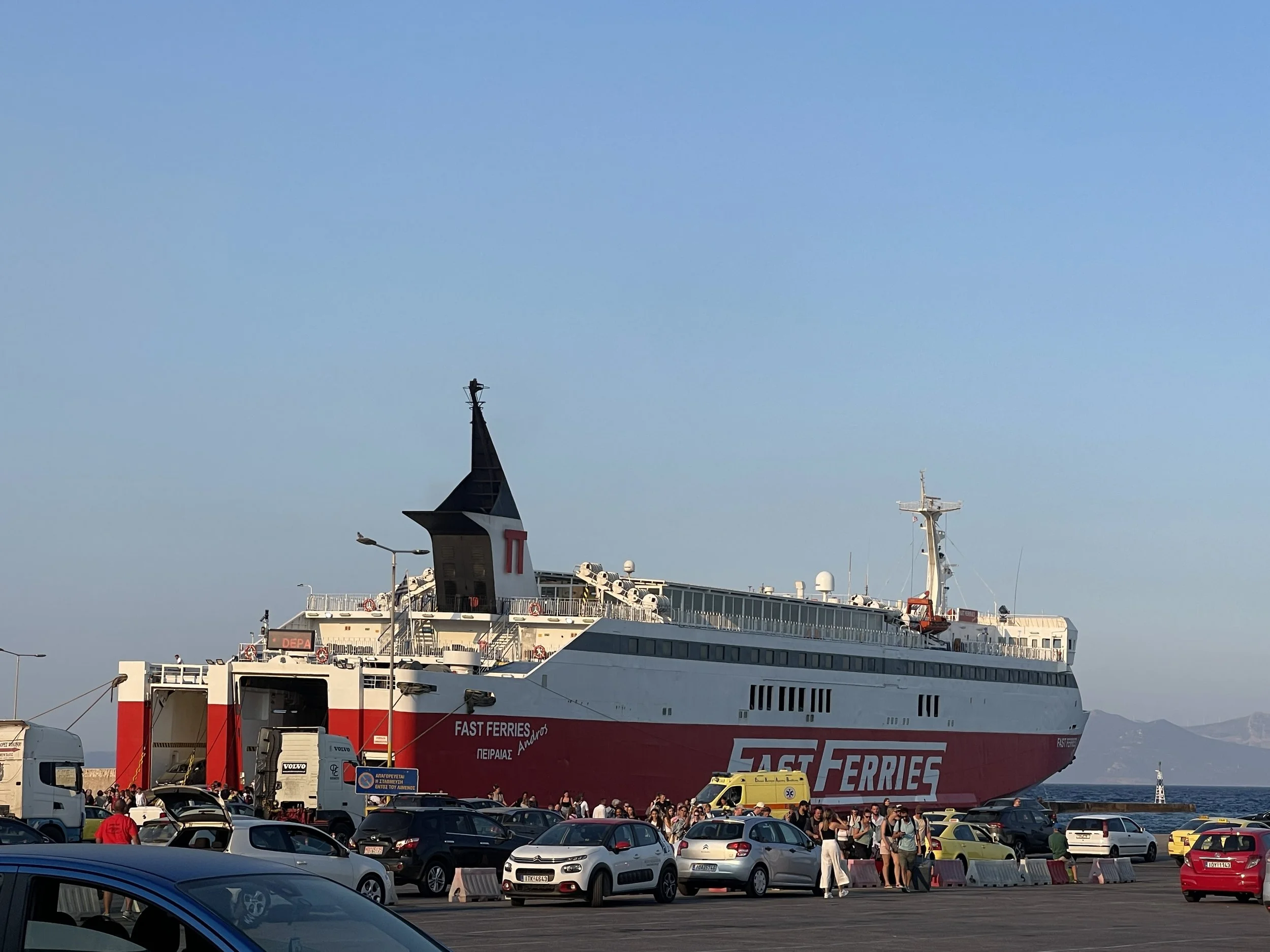
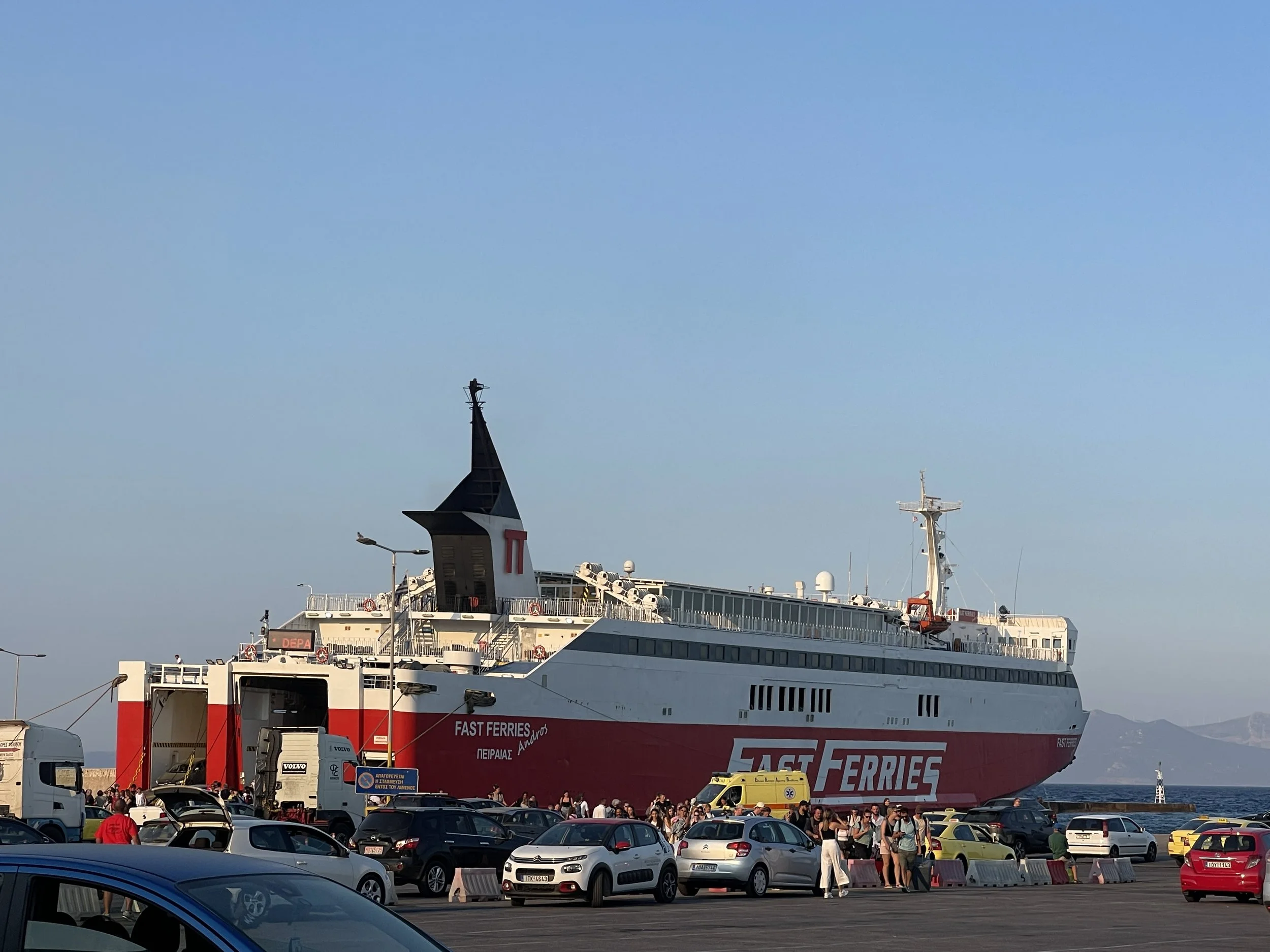
Everything You Need to Know Before You Go
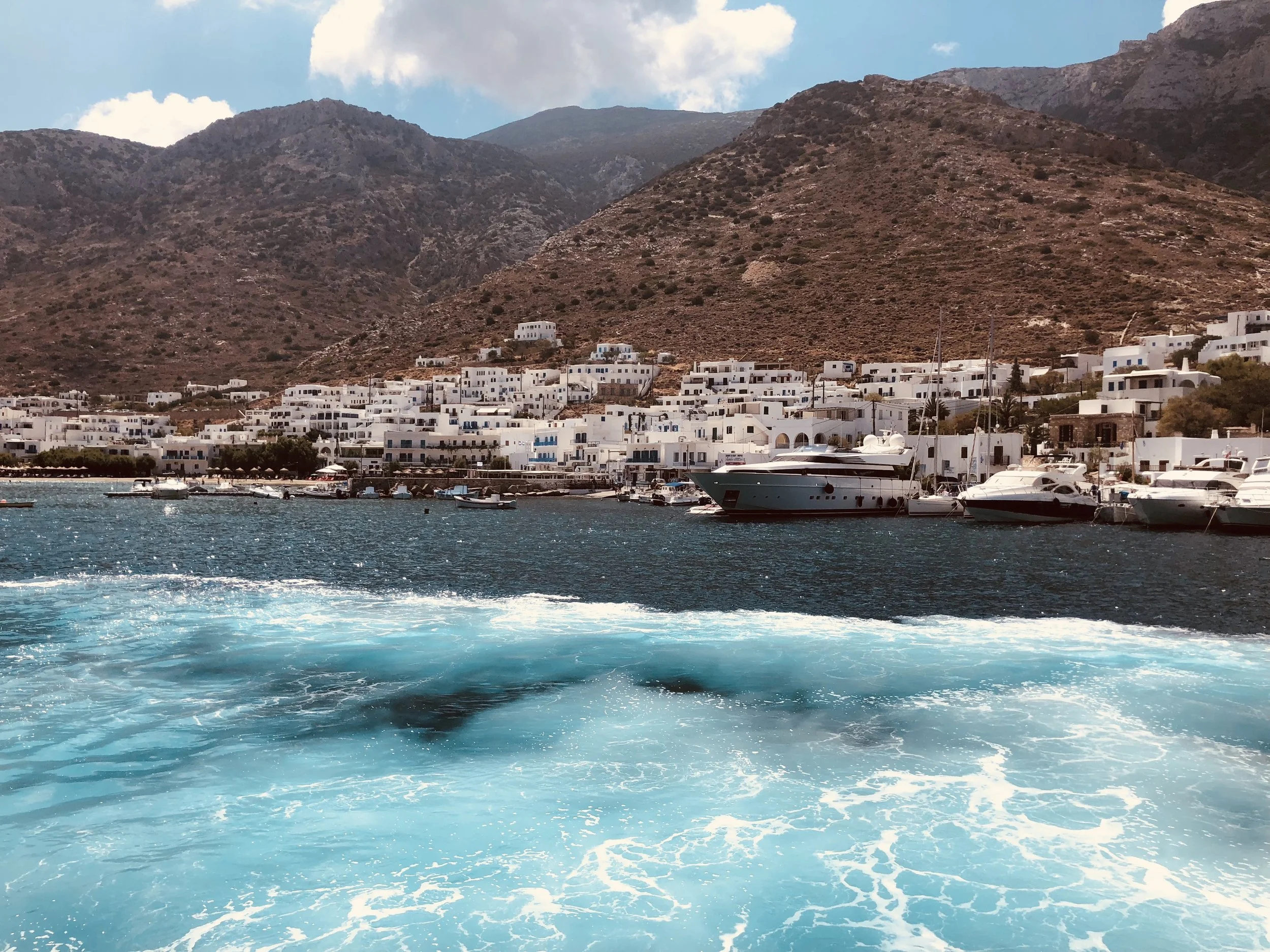
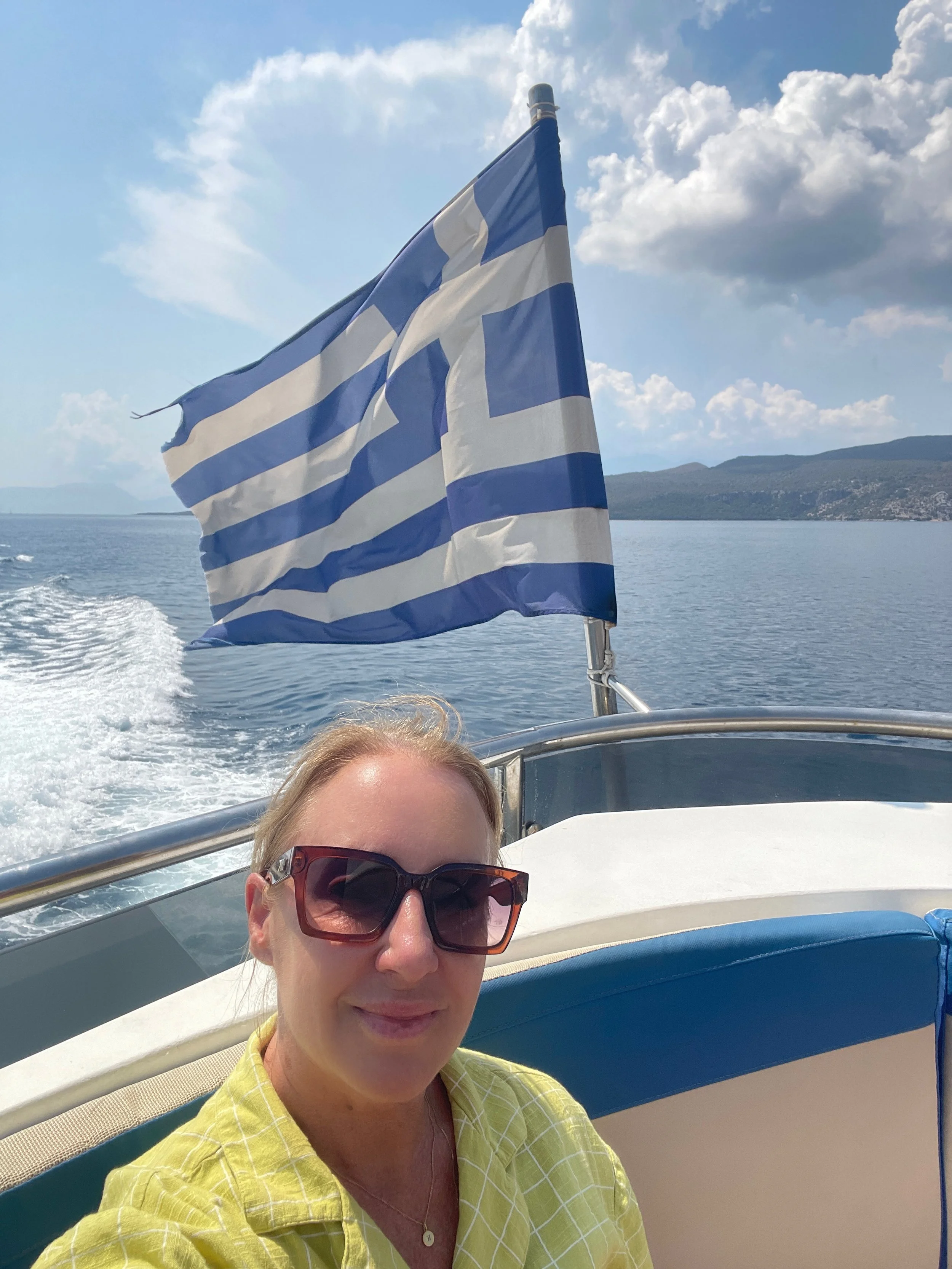
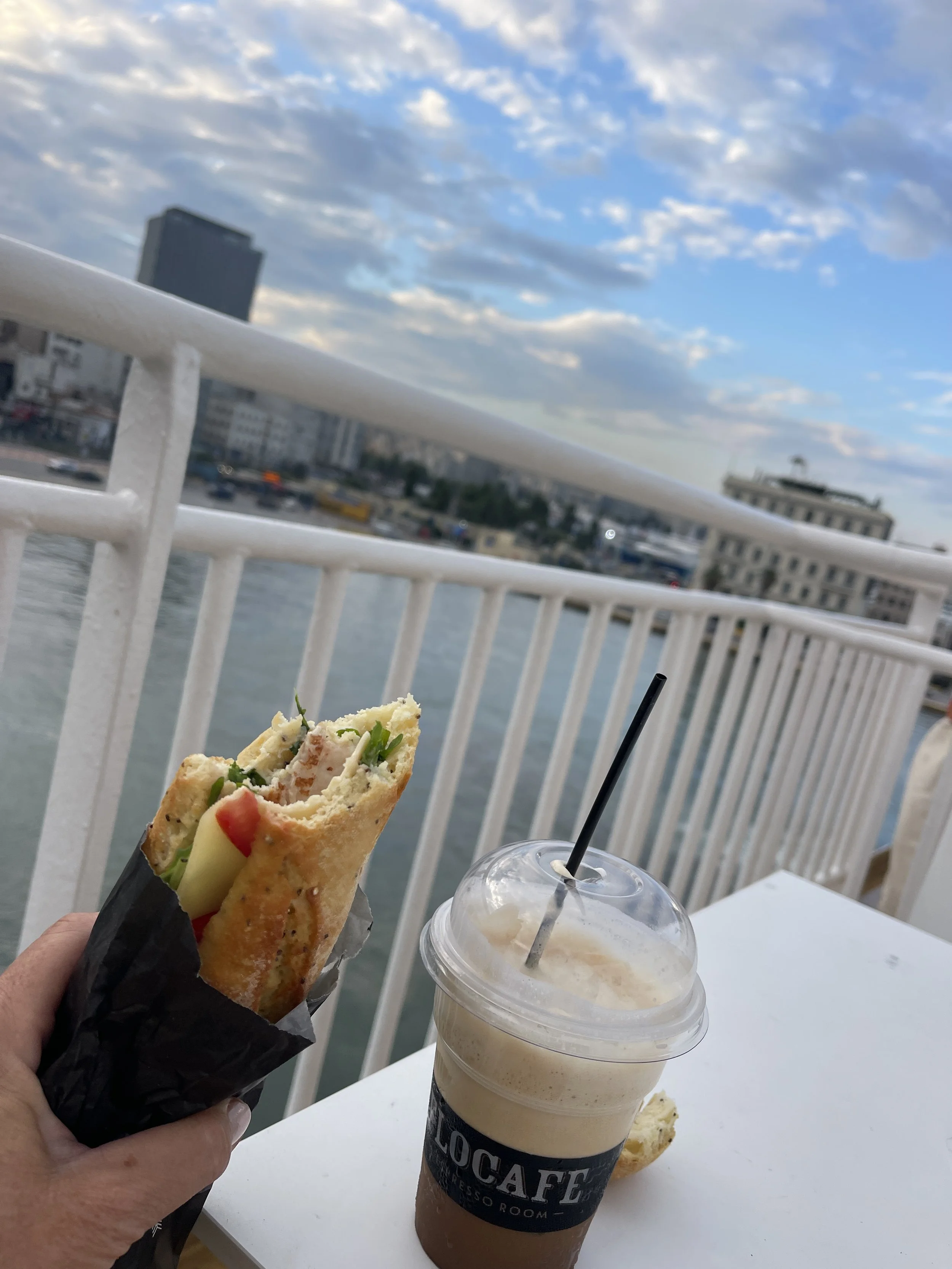
Island hopping is one of the great joys of travelling in Greece, and ferries are at the heart of it all. They are not just transport. They are part of the rhythm of Greek island life. Morning coffee & pastries on deck, salty air, islands slowly appearing on the horizon. It is a travel experience in its own right. (I love pulling away from each destination with the island view disappearing in the wake of the ferry - it’s a calming feeling...)
However for first-time visitors, Greek ferries can feel confusing. Different ports, ferry types, seasonal schedules, and endless route options. This guide is designed to take the guesswork out of ferry travel, so you can plan with confidence and enjoy the journey as much as the destination.
How Ferries Work in Greece
Ferries connect the Greek mainland with the islands, and also link islands within the same region. They operate year-round, but services increase significantly from May through September.
In peak summer:
Popular routes may run several times a day
More island-to-island options become available
Outside peak season:
Fewer services operate
Some islands may only be connected a few times per week
Understanding seasonality is key when planning an island-hopping itinerary.
Main Ferry Ports in Greece
Most ferry journeys begin from the Athens region.
Piraeus
The largest and busiest port. Serves the Cyclades, Crete, Dodecanese and North Aegean islands.
Rafina
Closer to the airport and often more convenient for northern Cyclades islands.
Lavrio
Smaller and less commonly used, but useful for certain routes.
On the islands, ports are usually simple to navigate, although larger islands may have more than one.
Types of Greek Ferries
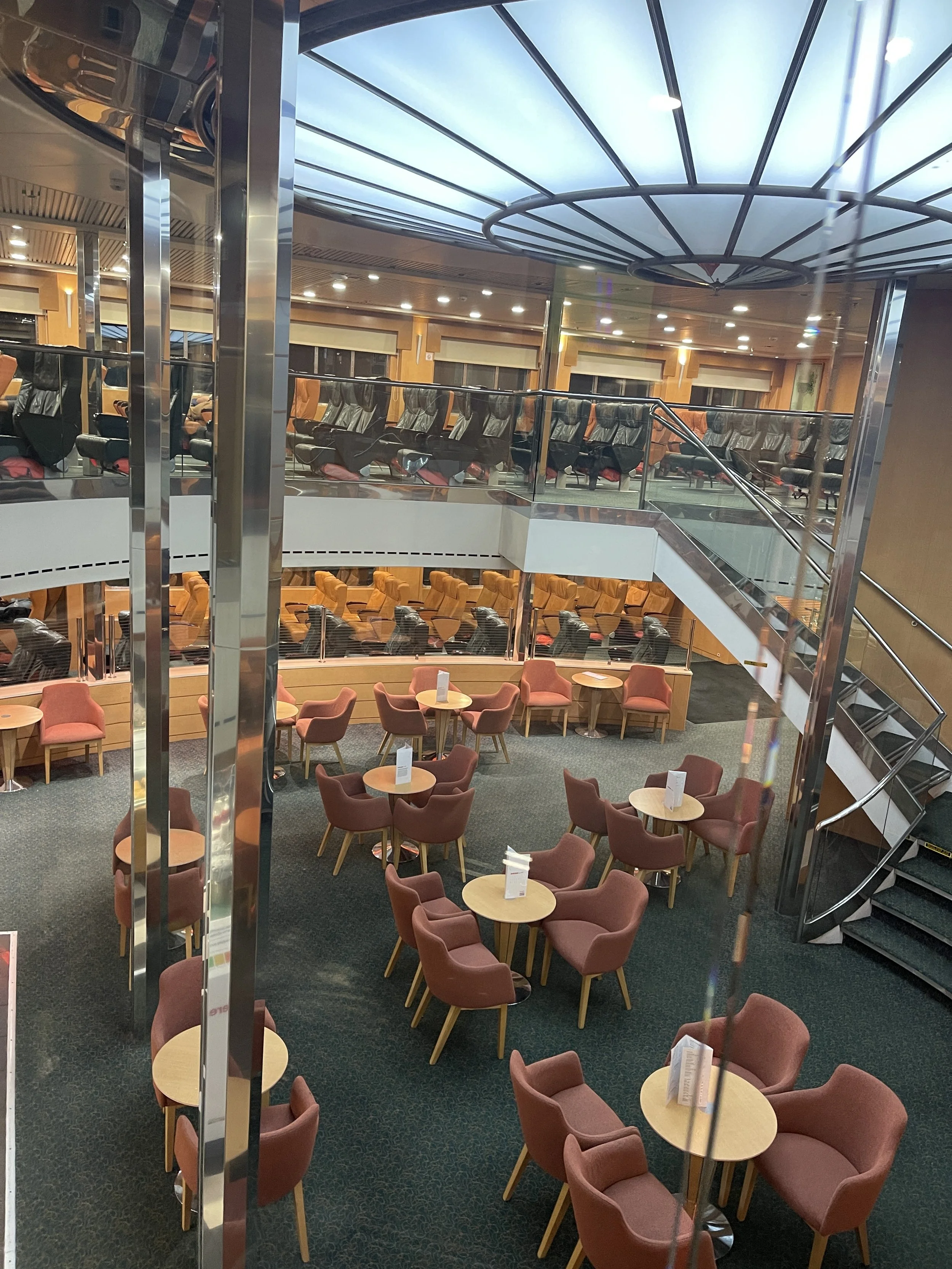
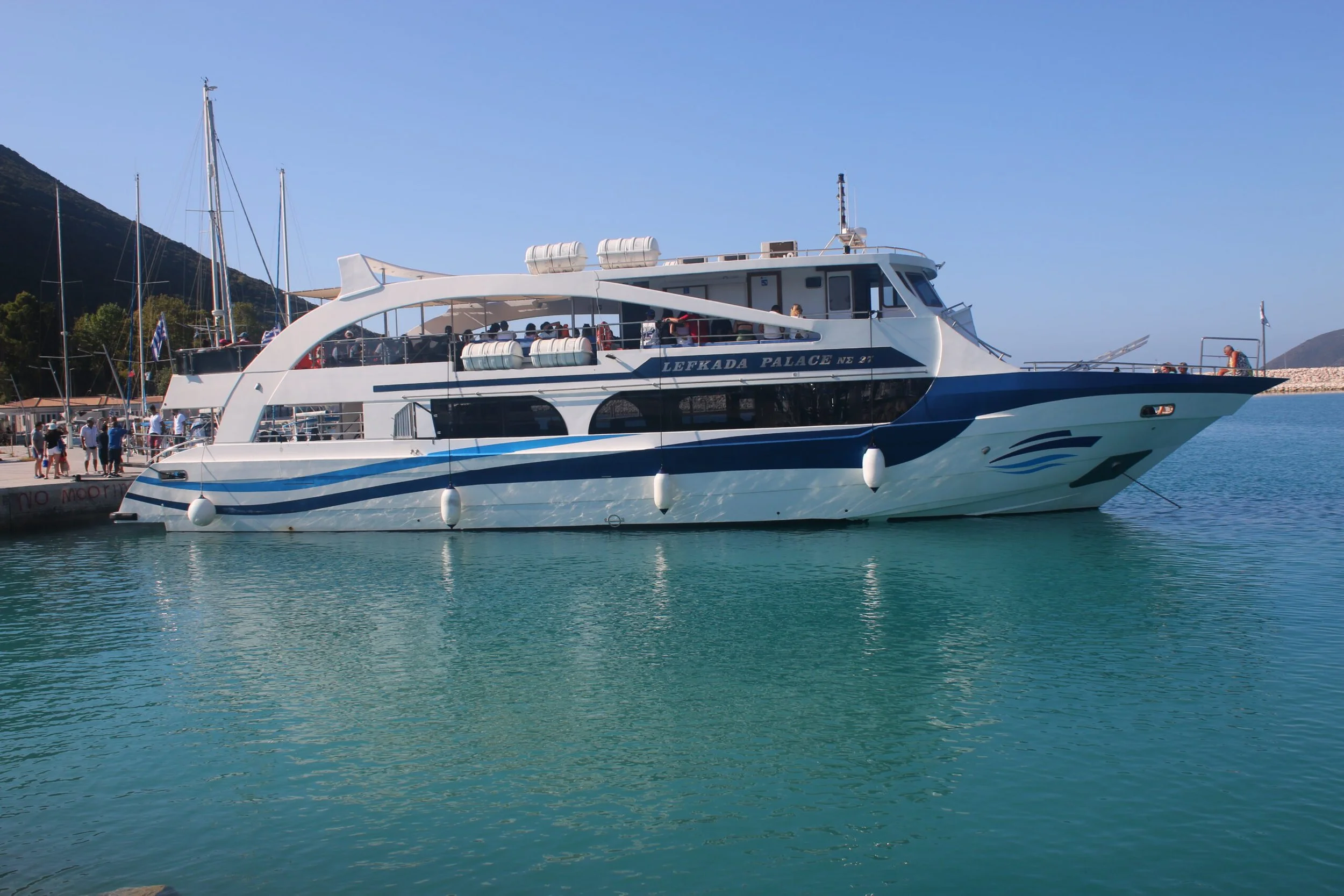
Choosing the right ferry makes a big difference to your experience. Choosing from the largest ferries that carry vehicles and offer cabins for long journeys, to the small ferries that service the smaller islands close together, it’s important to choose the correct one for your route and travel style.
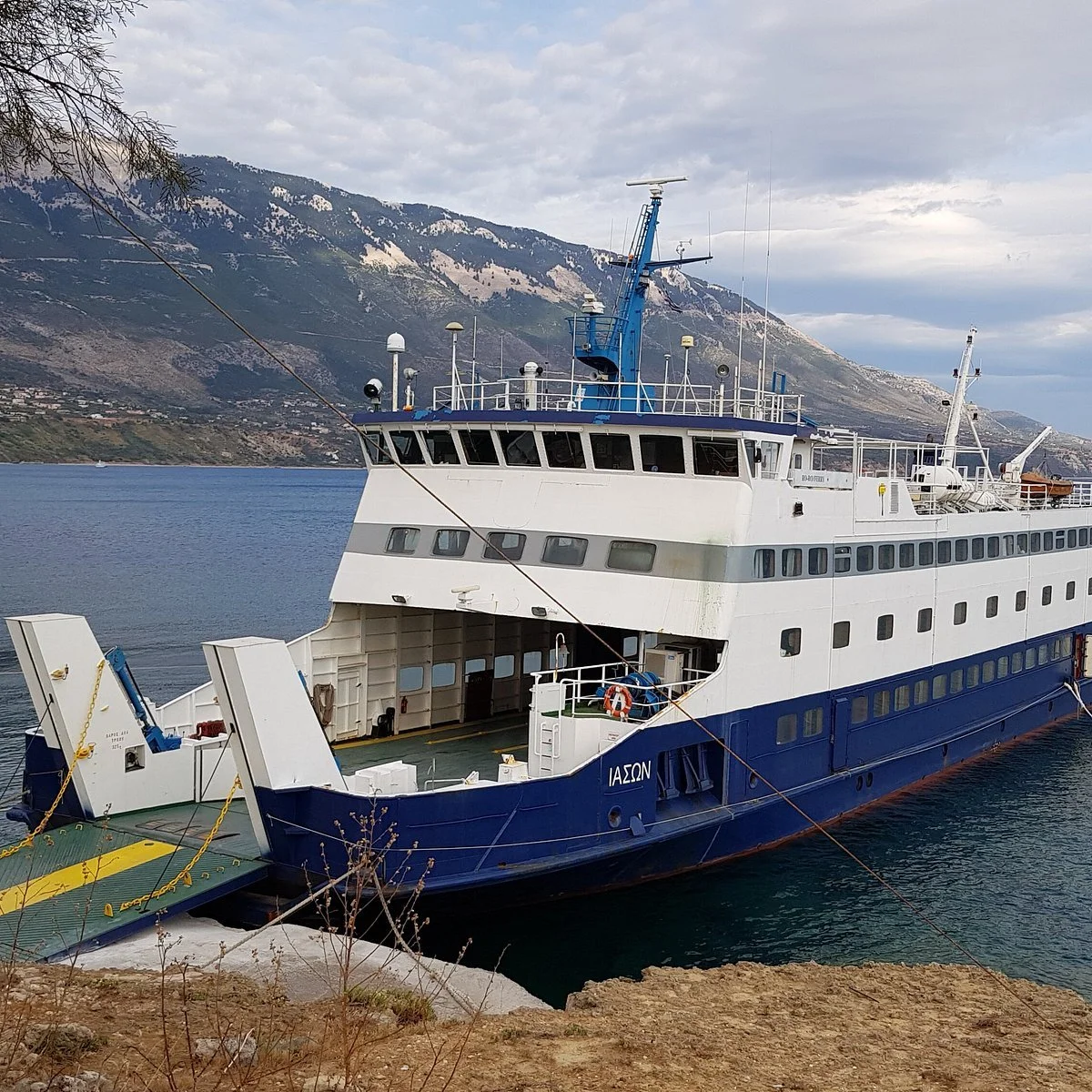
Conventional Ferries
Slower but very comfortable
Large outdoor decks
Cafés and lounges
More stable in windy conditions
Usually cheaper
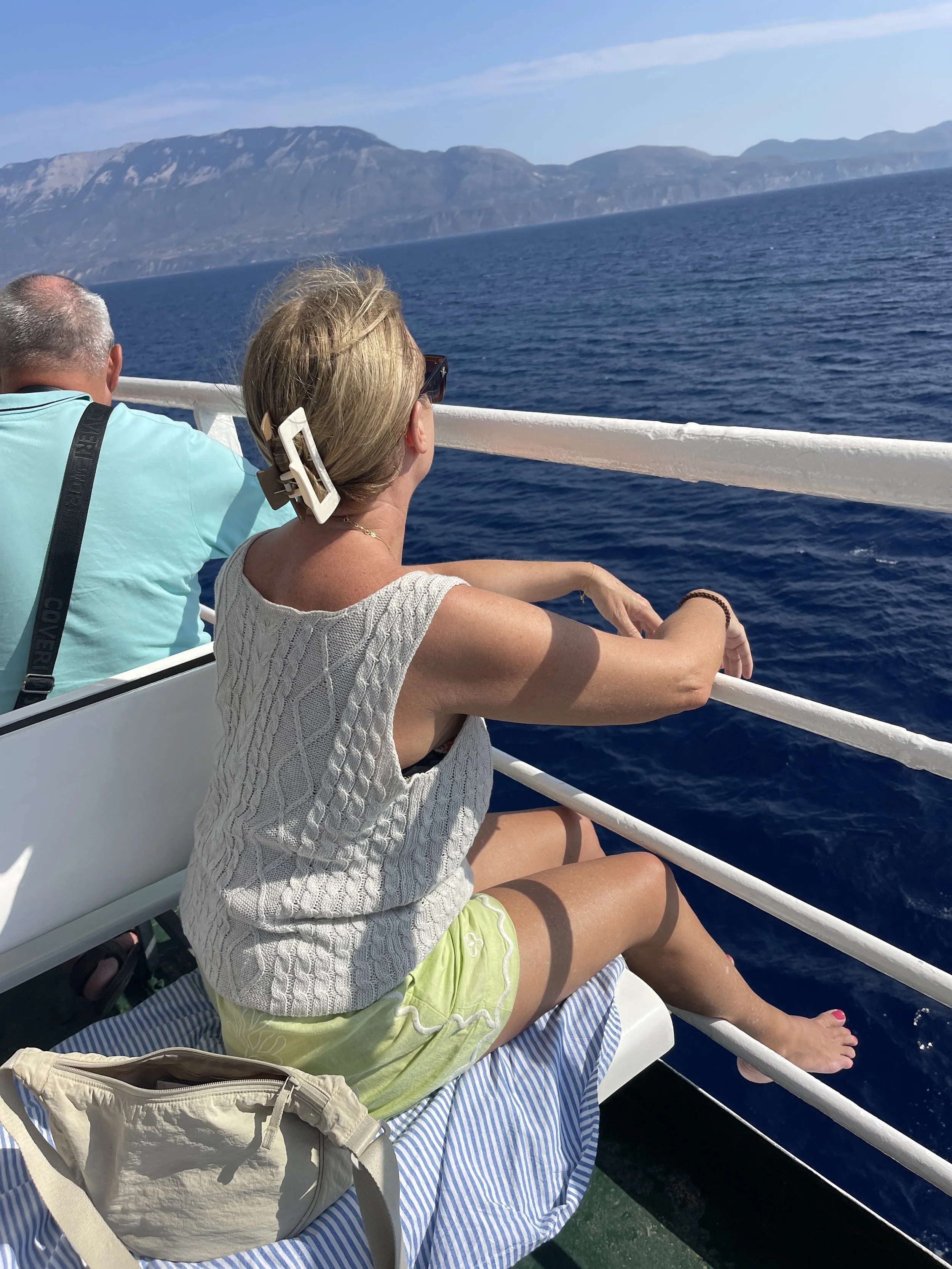
These are my personal favourites if you enjoy a relaxed journey. I love being able to sit out on deck with the warm breeze and sunshine on my face. Sipping a cold frappe and devouring a Greek pastry.
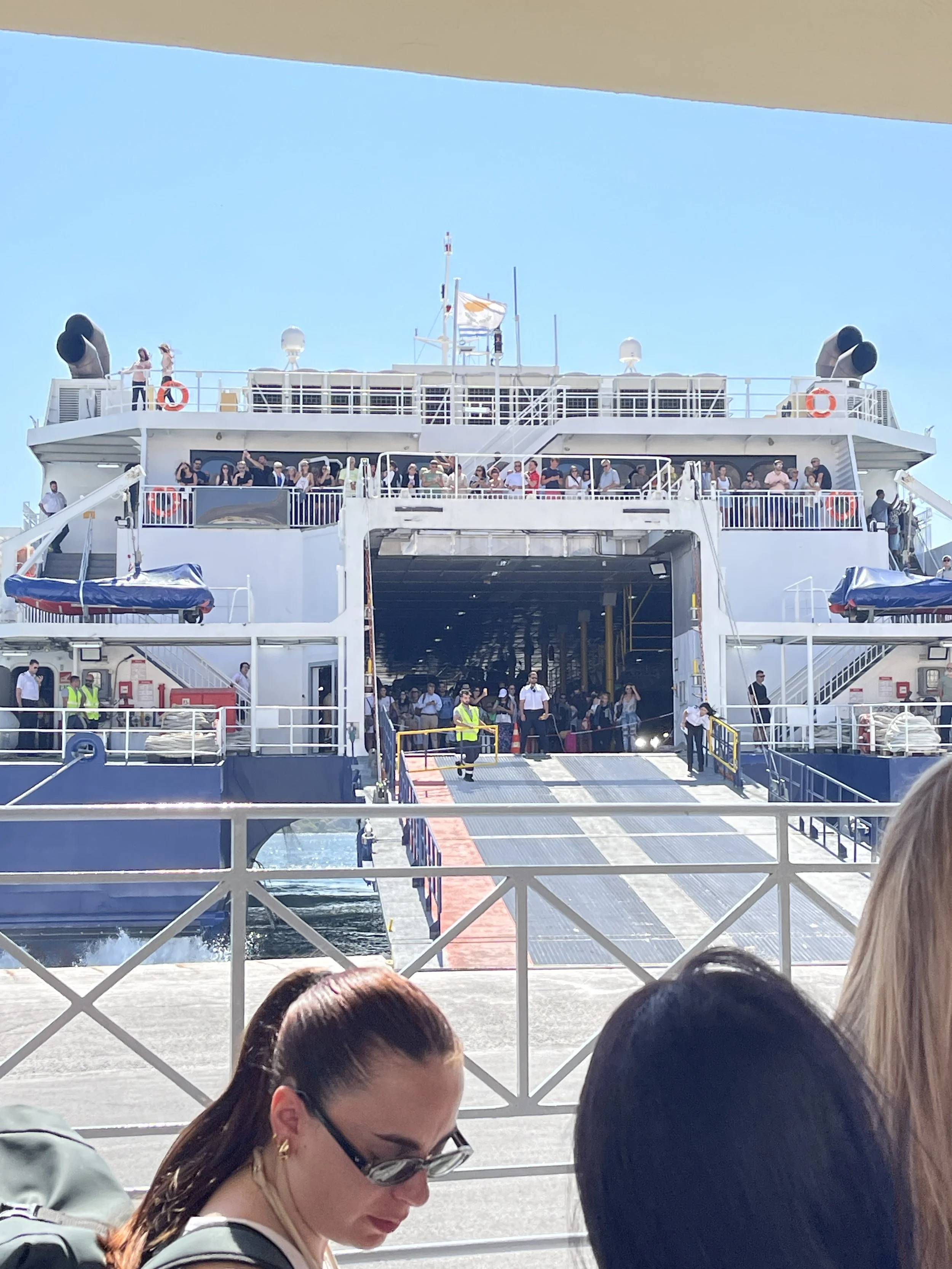
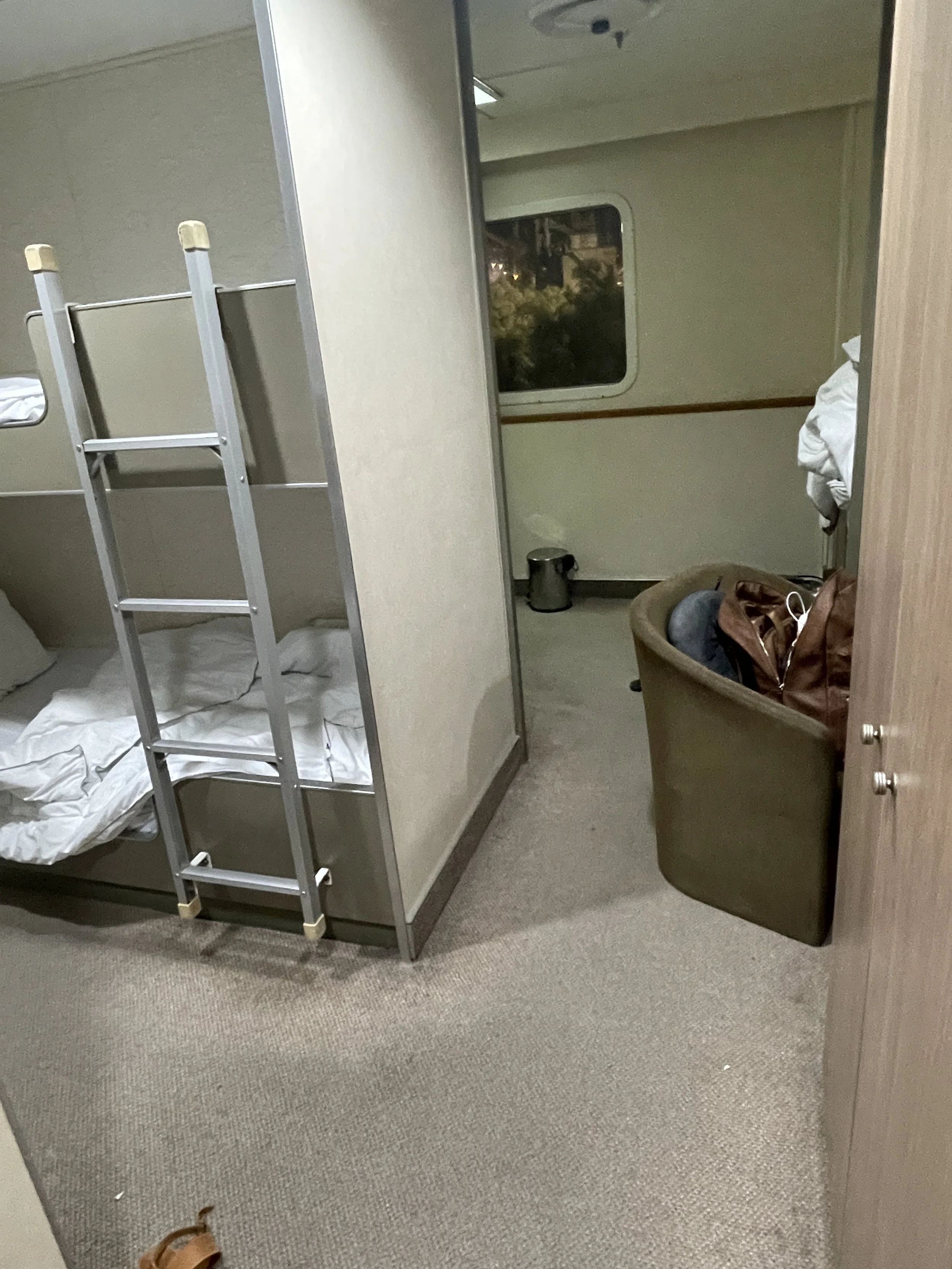
Docking at different islands on your journey, watching passengers & vehicles disembark/embark in a surprisingly orderly fashion, is all part of the enjoyment of the journey. I’ve even done a long overnight journey and booked a cabin. So enjoyable being lulled to sleep by the gentle motion of the sea, then waking up refreshed at a new destination…
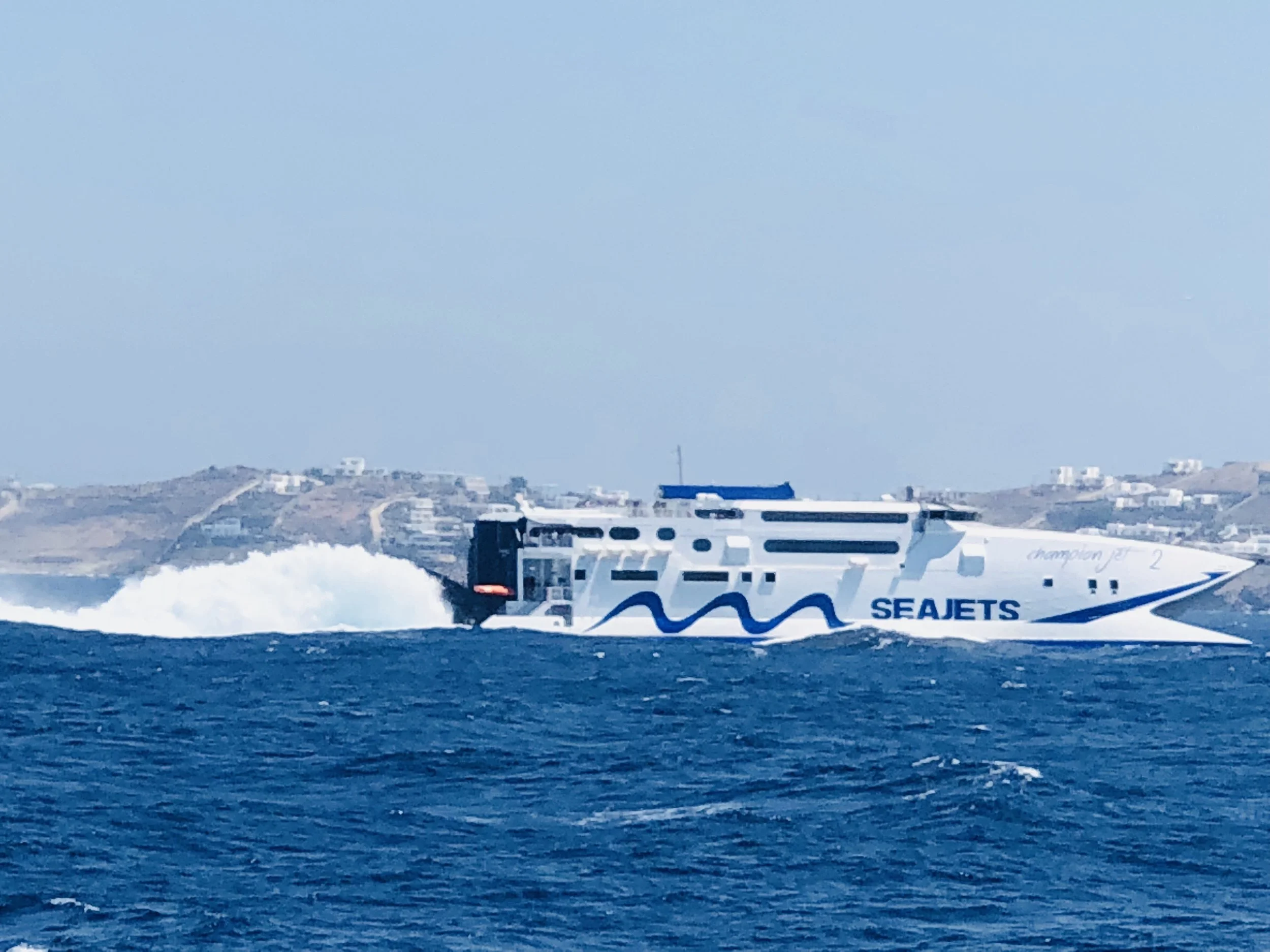
High-Speed Ferries
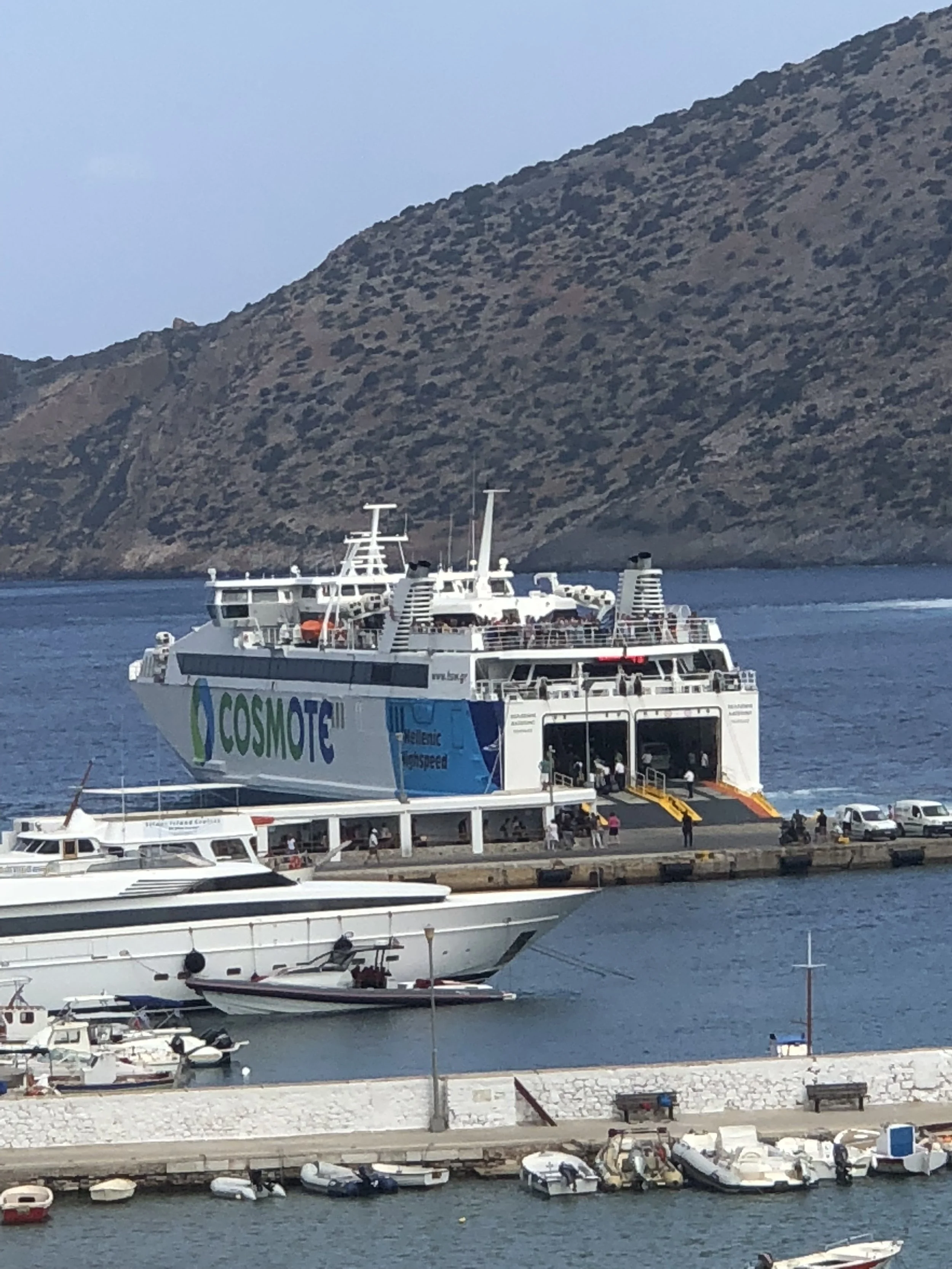
Faster travel times
Higher prices
Limited outdoor areas
Can feel bumpy in strong winds
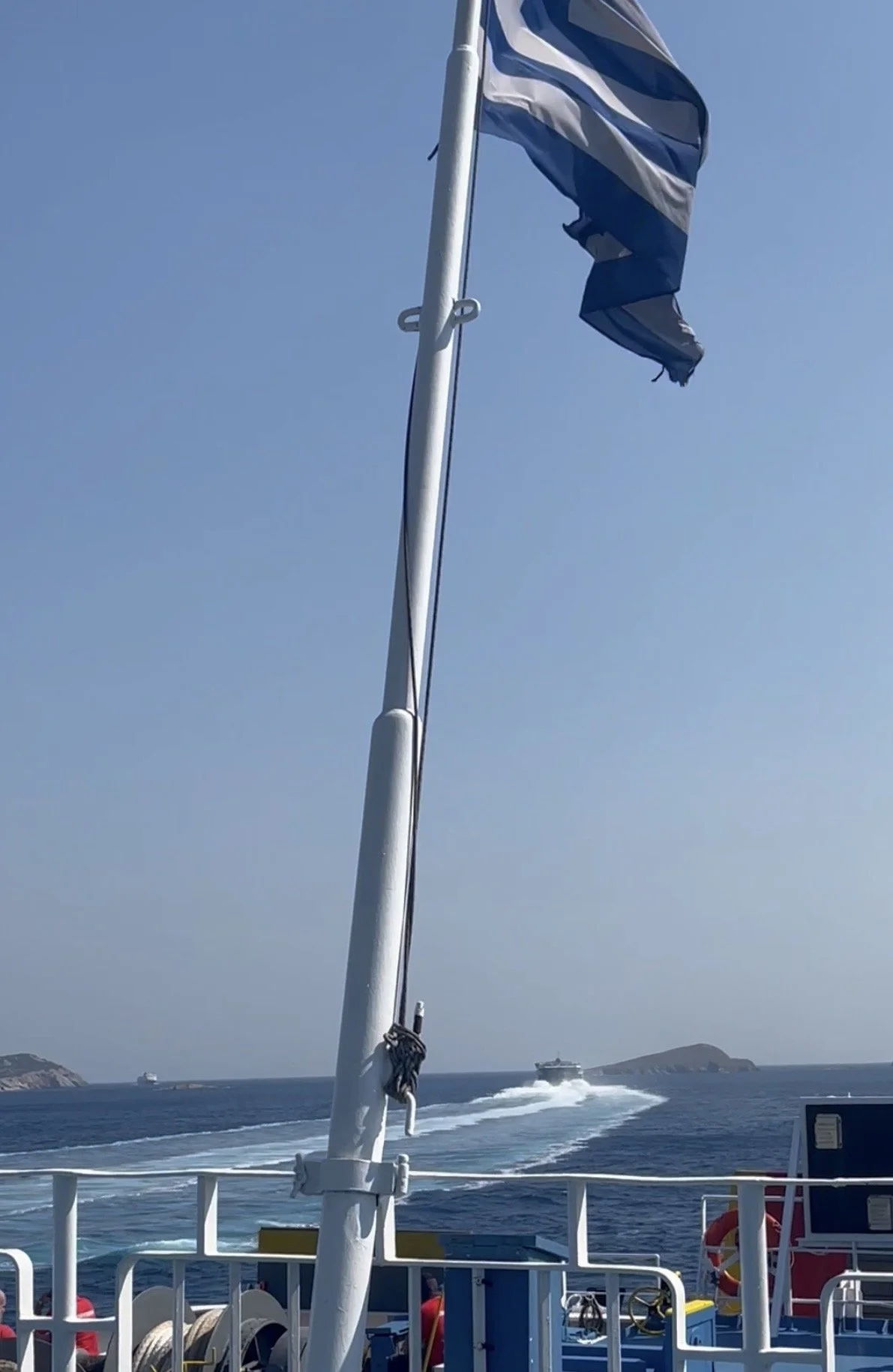
These are great for short trips between islands if you want to make the most of your time. If you are prone to seasickness, the larger ferries are usually the better option, however some routes only offer the high speed ferries, so bring your anti-seasickness meds, just in case!
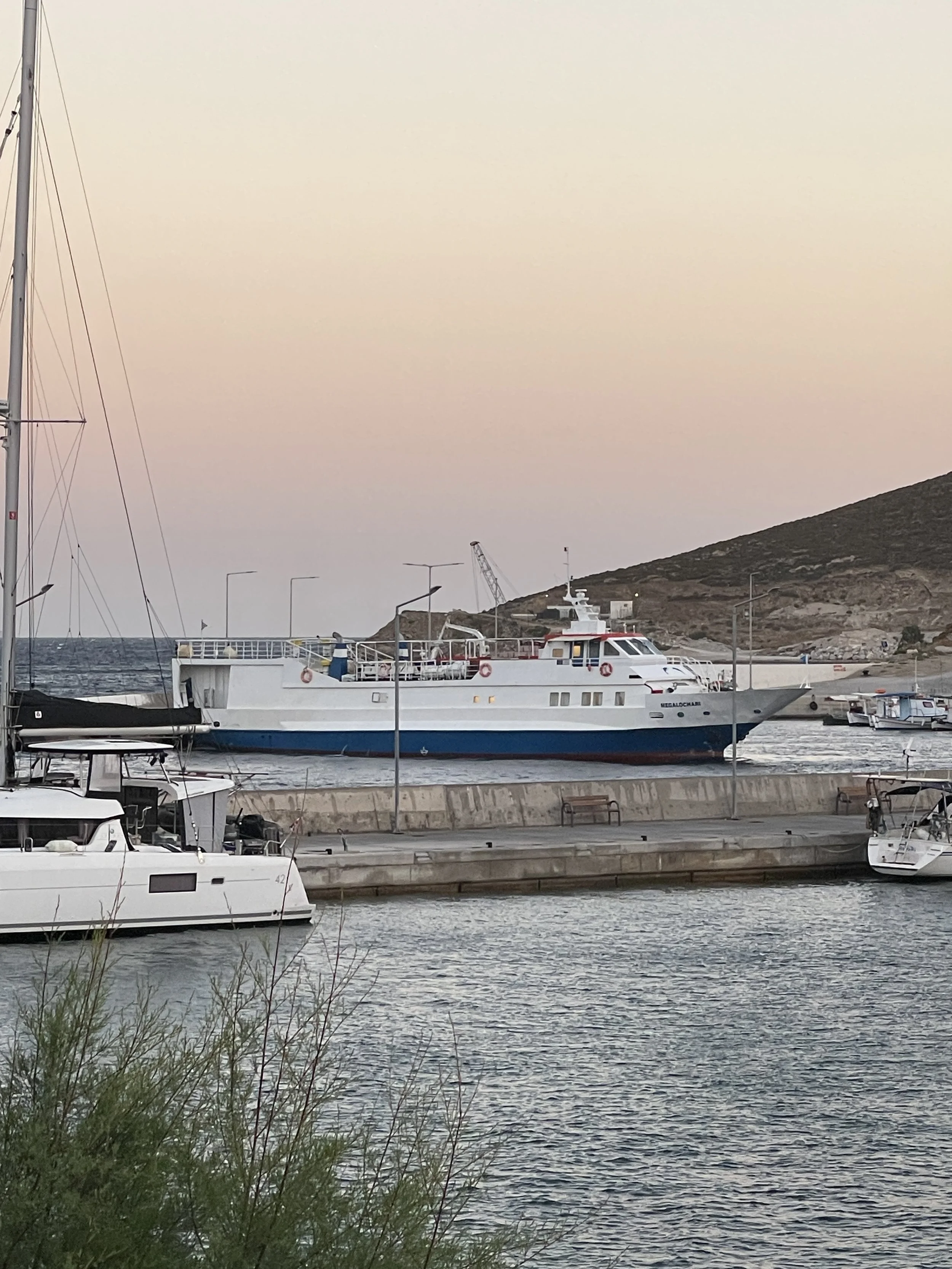
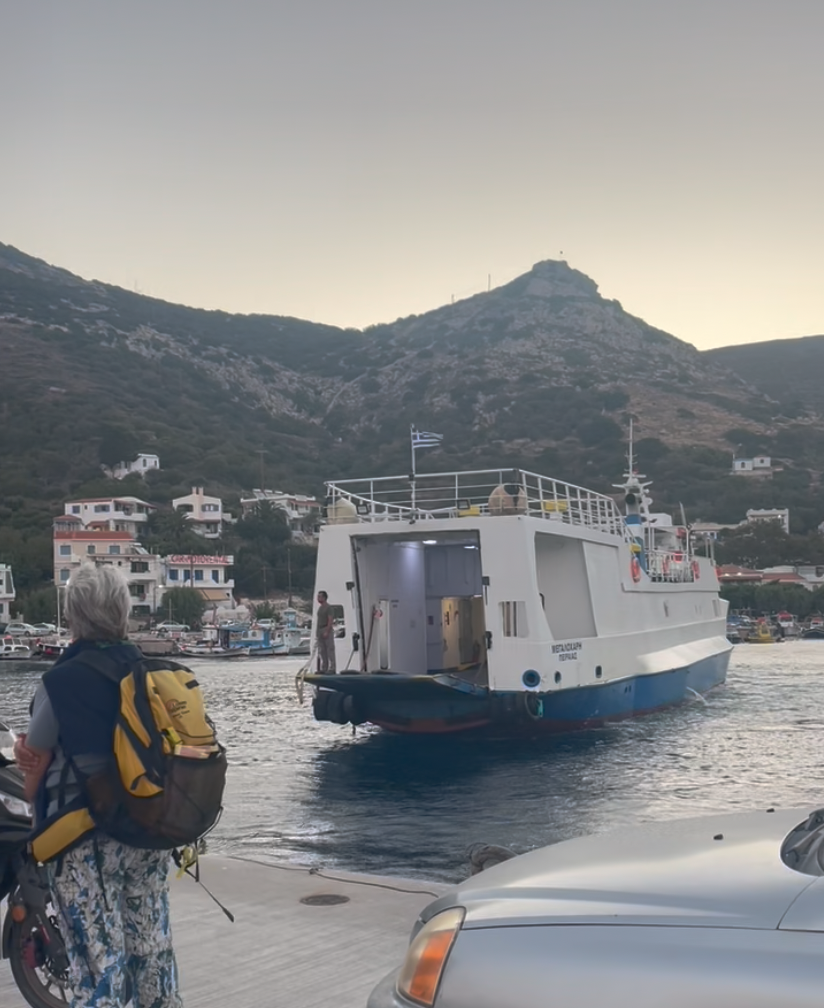
Local Ferries
Slower travel times
Reasonable prices
Often only outdoor areas
Can feel bumpy in strong winds
These often service the smaller islands with small distances between them. Make sure you check the schedules carefully, as services are not always operated every day.
Ferry Companies You’ll See Most Often
Some of the main operators include:
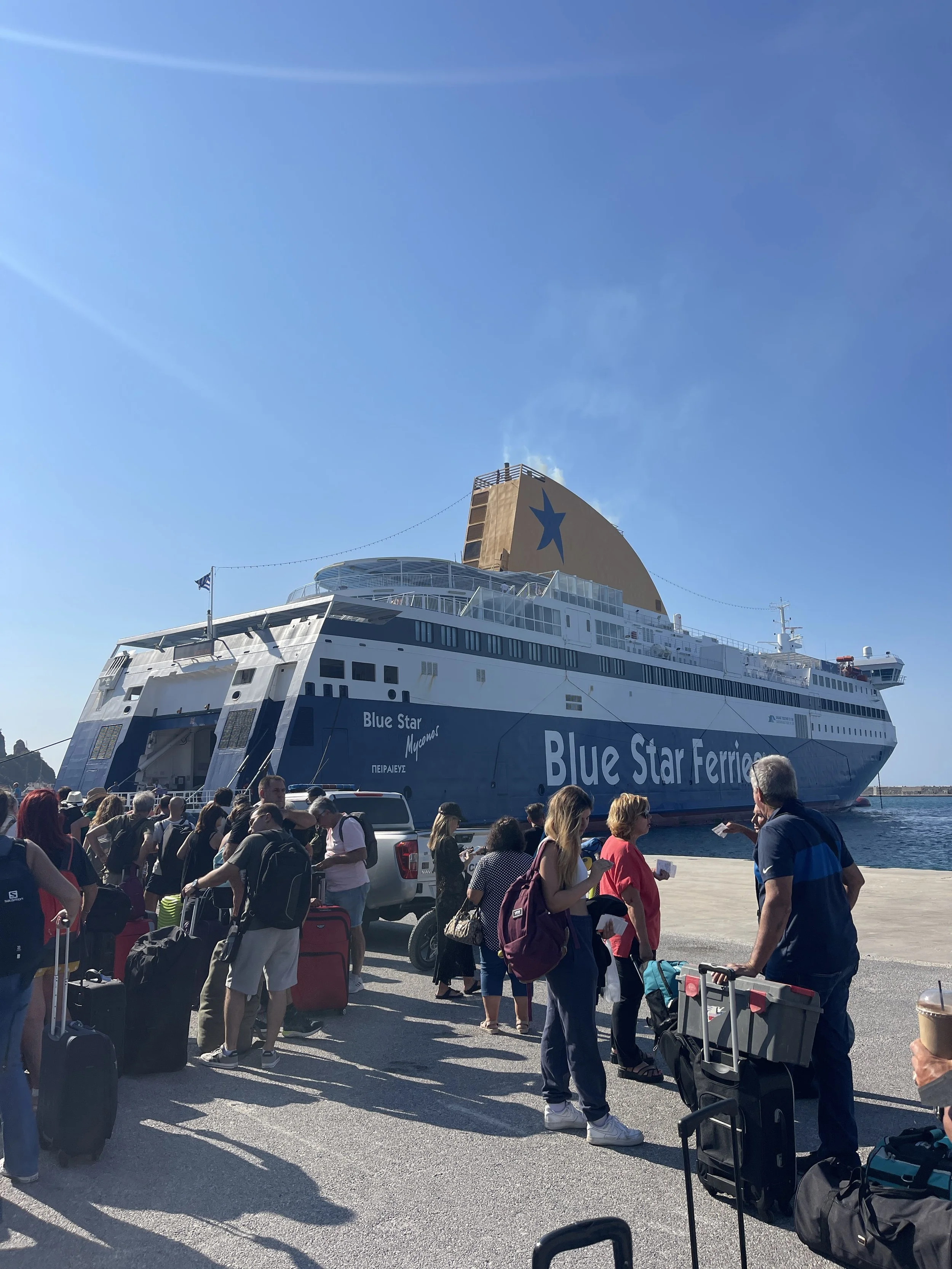
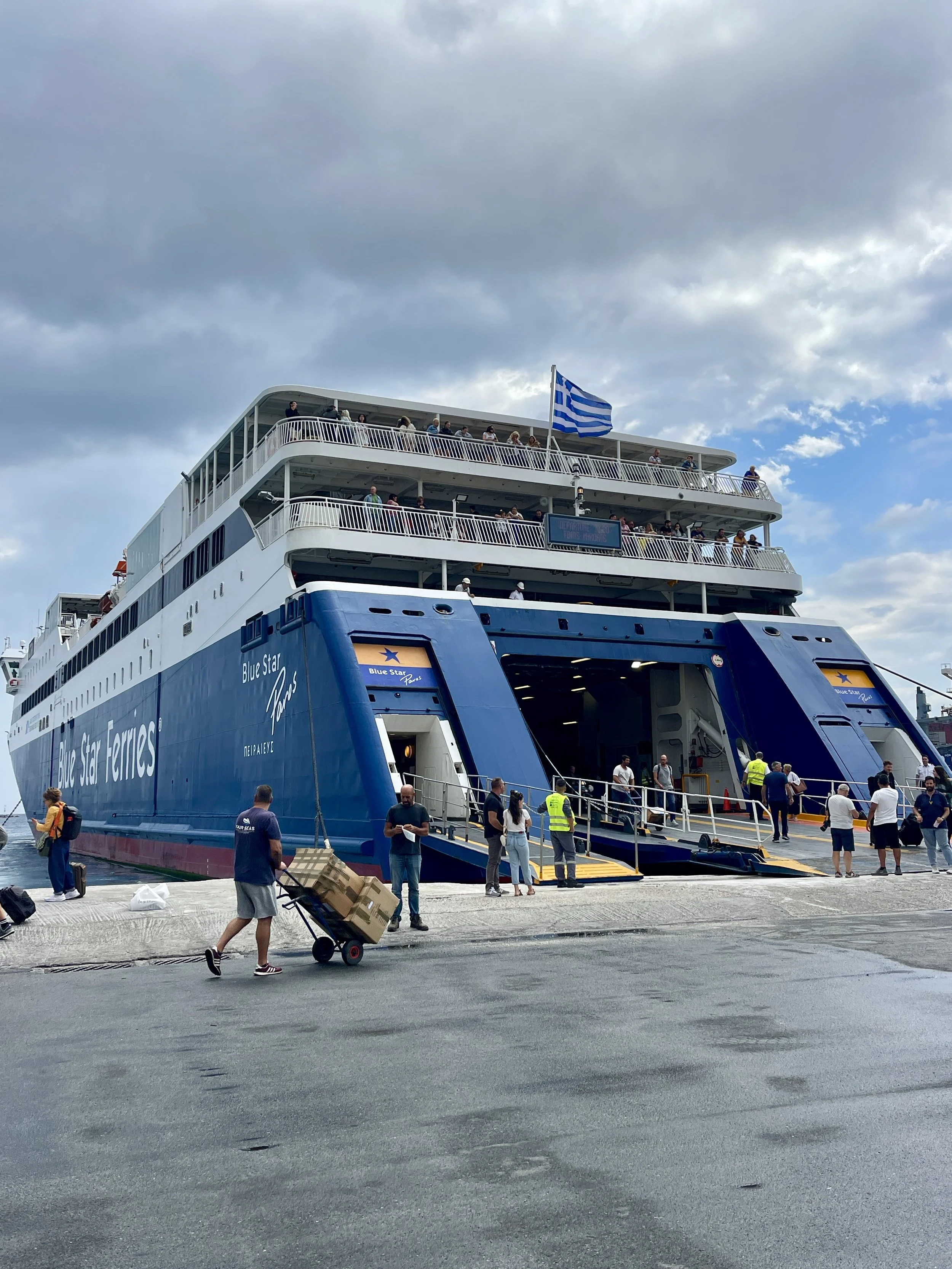
Blue Star Ferries
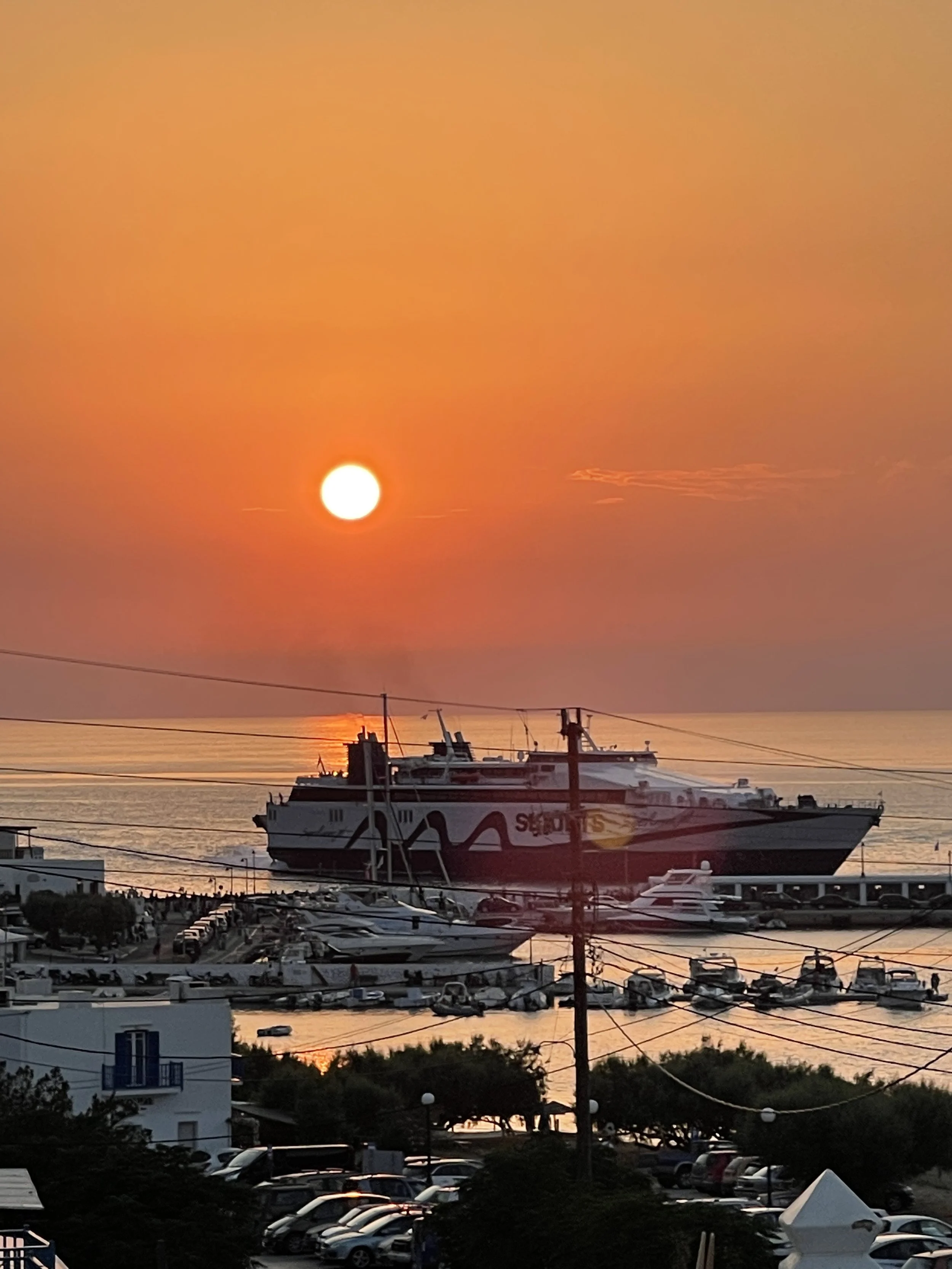
Reliable, spacious and excellent for longer routes.SeaJets
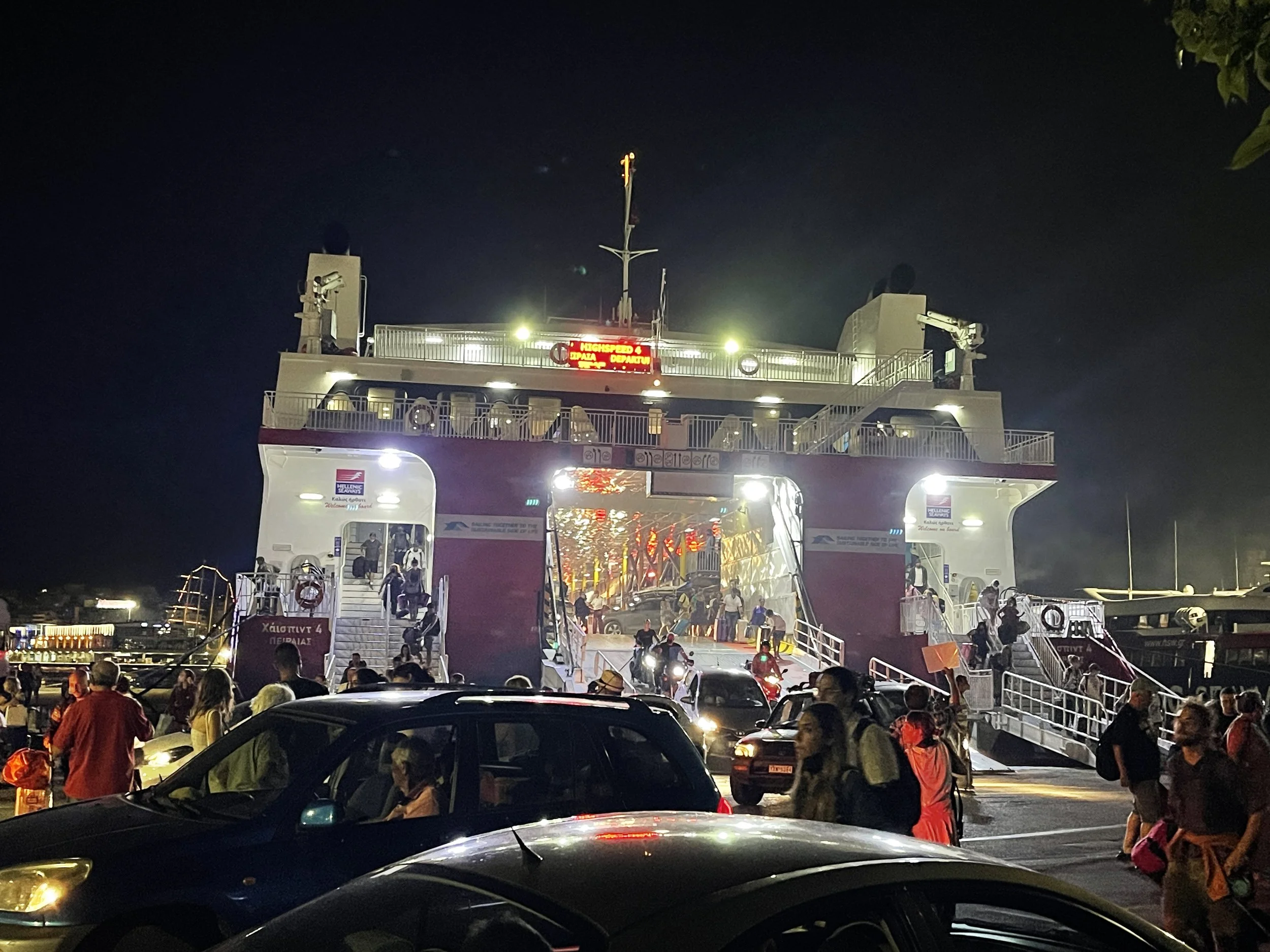
Best known for fast island connections, particularly in summer.Hellenic Seaways
Services many Cyclades routes.Anek Lines
Large ships servicing many regions
Each company has different vessels, seating styles and pricing, which is why expert planning matters.
How and When to Book Ferries
Ferries can be booked:
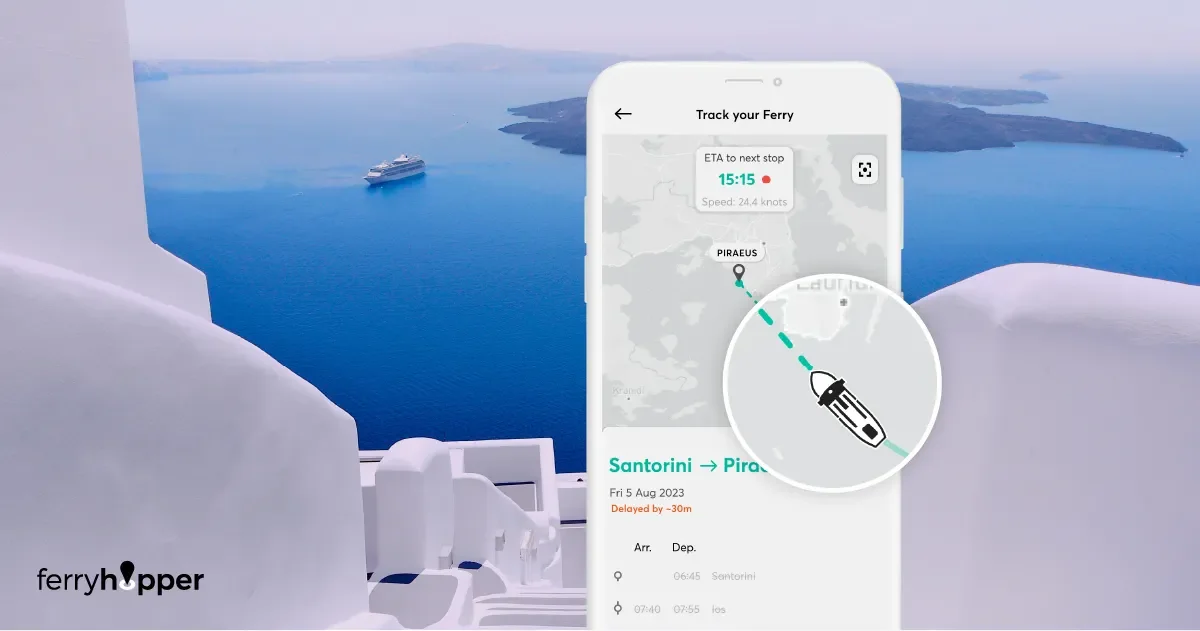
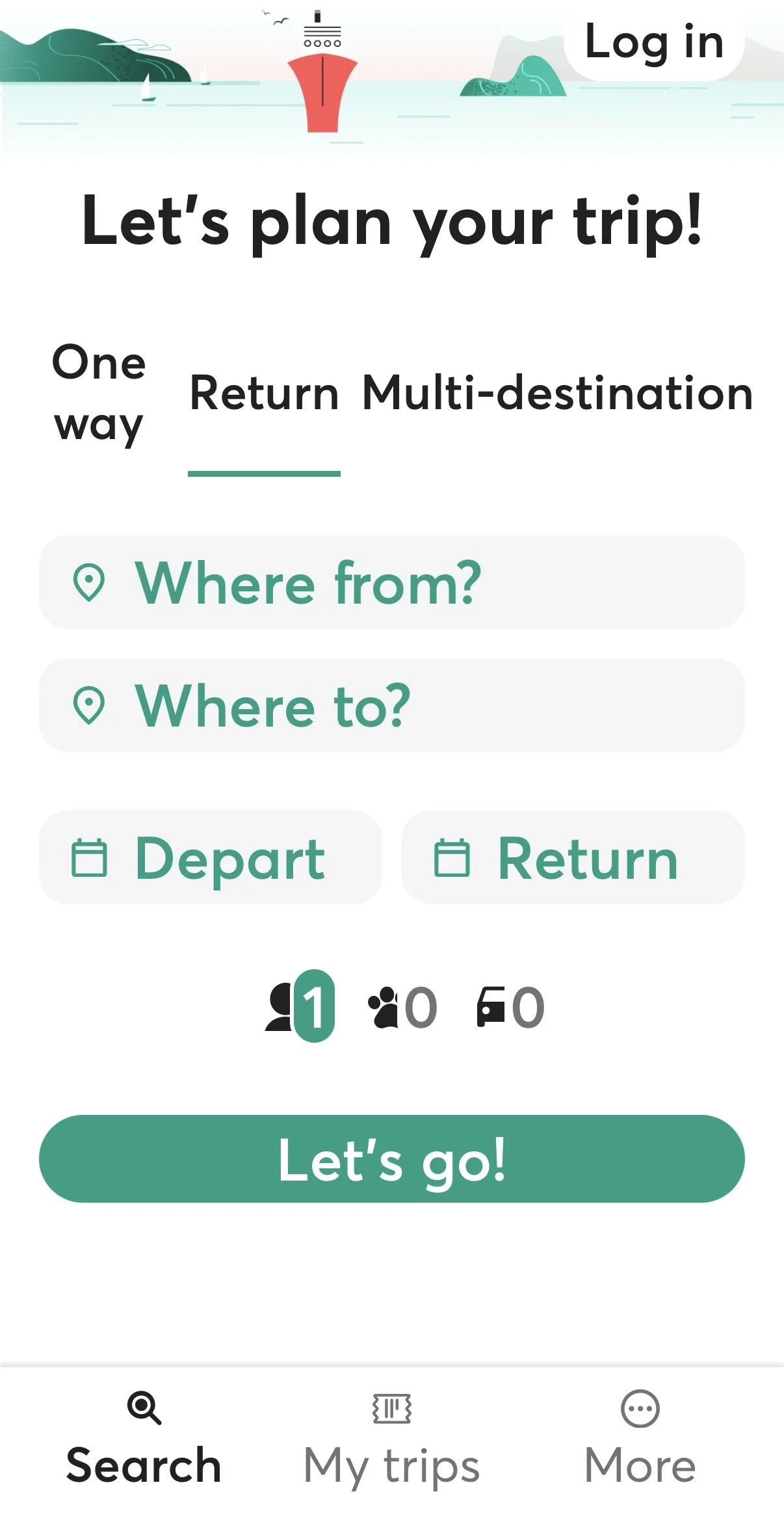
Via websites/apps such as Ferryhopper (my personal favourite that I use every year - it holds your ticket on your phone that the port staff scan upon boarding, and changes can be made easily on the app)
If already in Greece, most ports have ticket booths or travel agencies that will sell you tickets on the spot
Through a travel advisor (I can book these easily for you, as I have travelled on the ferry system many, many times)
During July and August, booking ahead is strongly recommended, especially for:
Popular island routes
High-speed ferries
Travel with vehicles
In shoulder season, there is more flexibility, but fewer daily services.
Luggage on Greek Ferries
One of the joys of ferry travel is luggage freedom.
No airline-style baggage limits
Large suitcases are fine
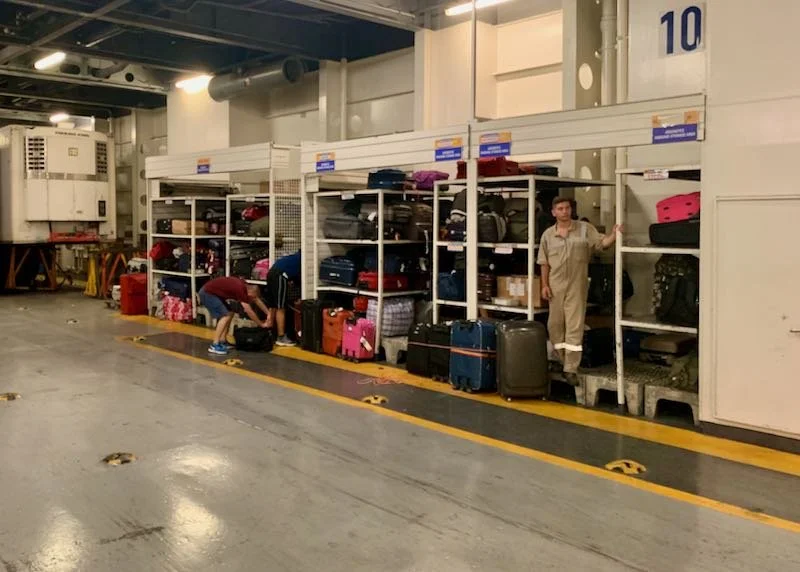
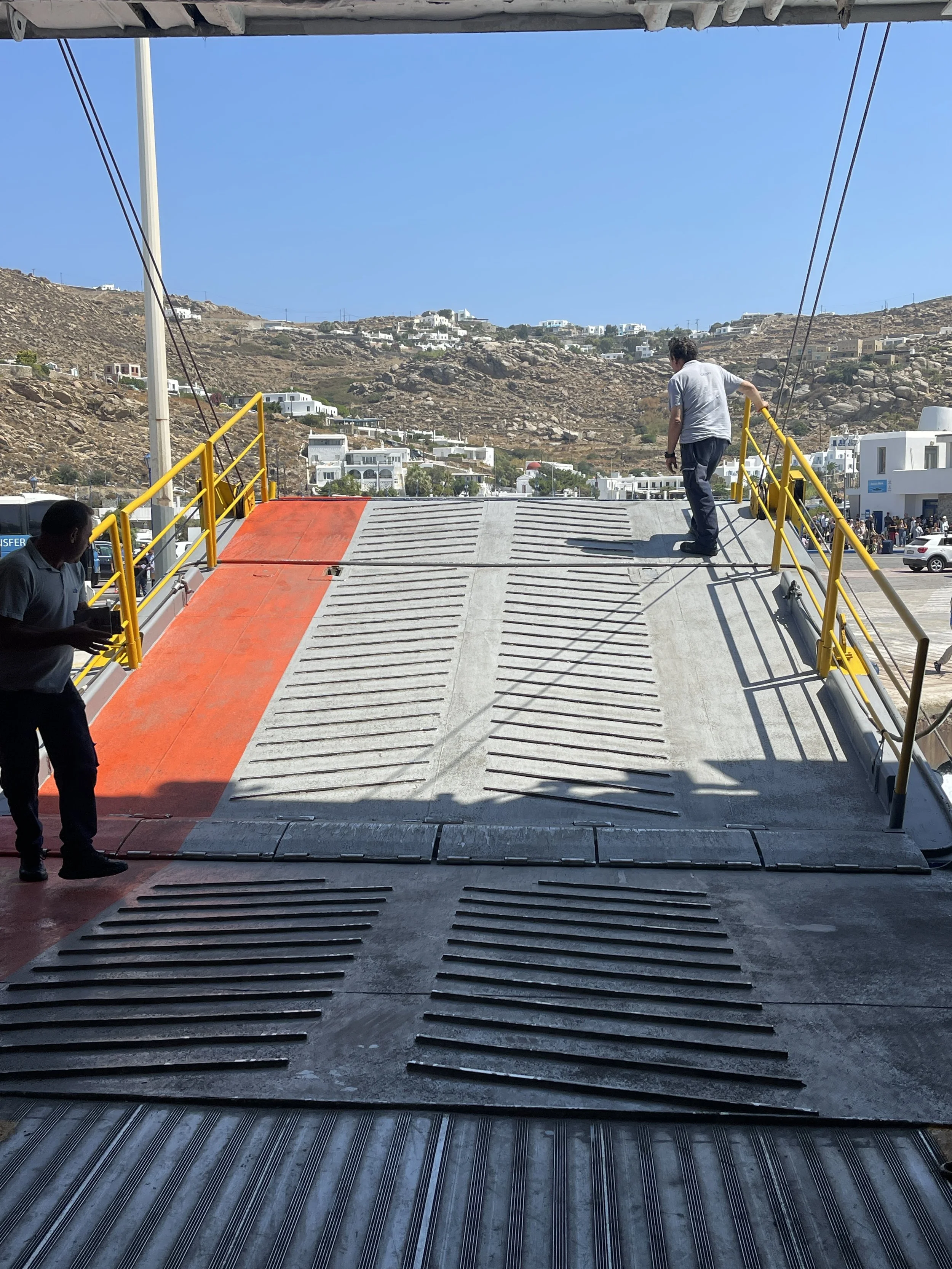
Bags are stored in well organised luggage areas in the hold of the ship - easily accessible on your ramp departure. Small bags/backpacks etc can be taken upstairs with you.
That said, you will deal with ramps and busy ports. A suitcase you can comfortably manage makes life much easier (I only ever travel with a mid sized suitcase & a small backpack).
Boarding and Seating Tips
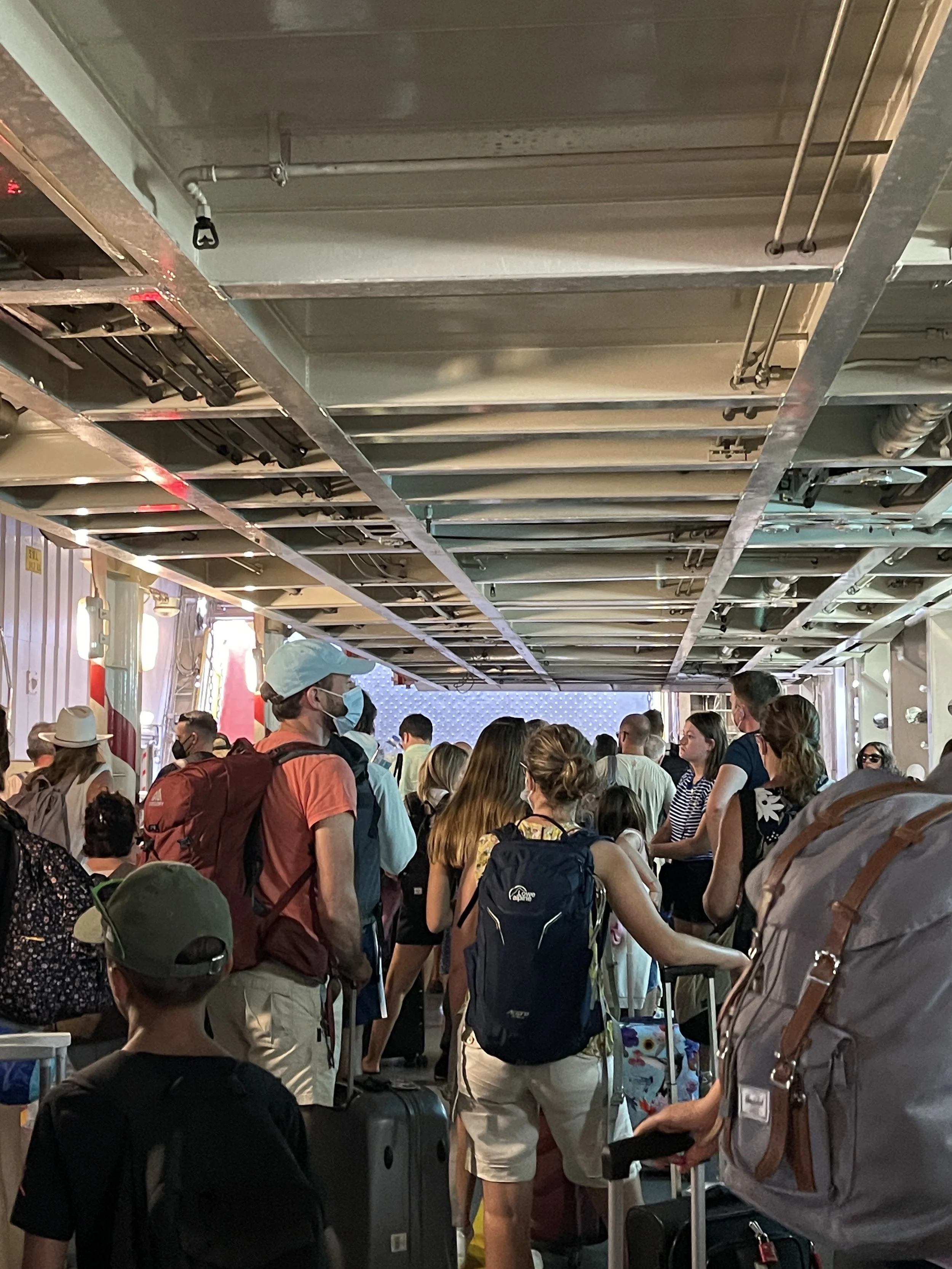
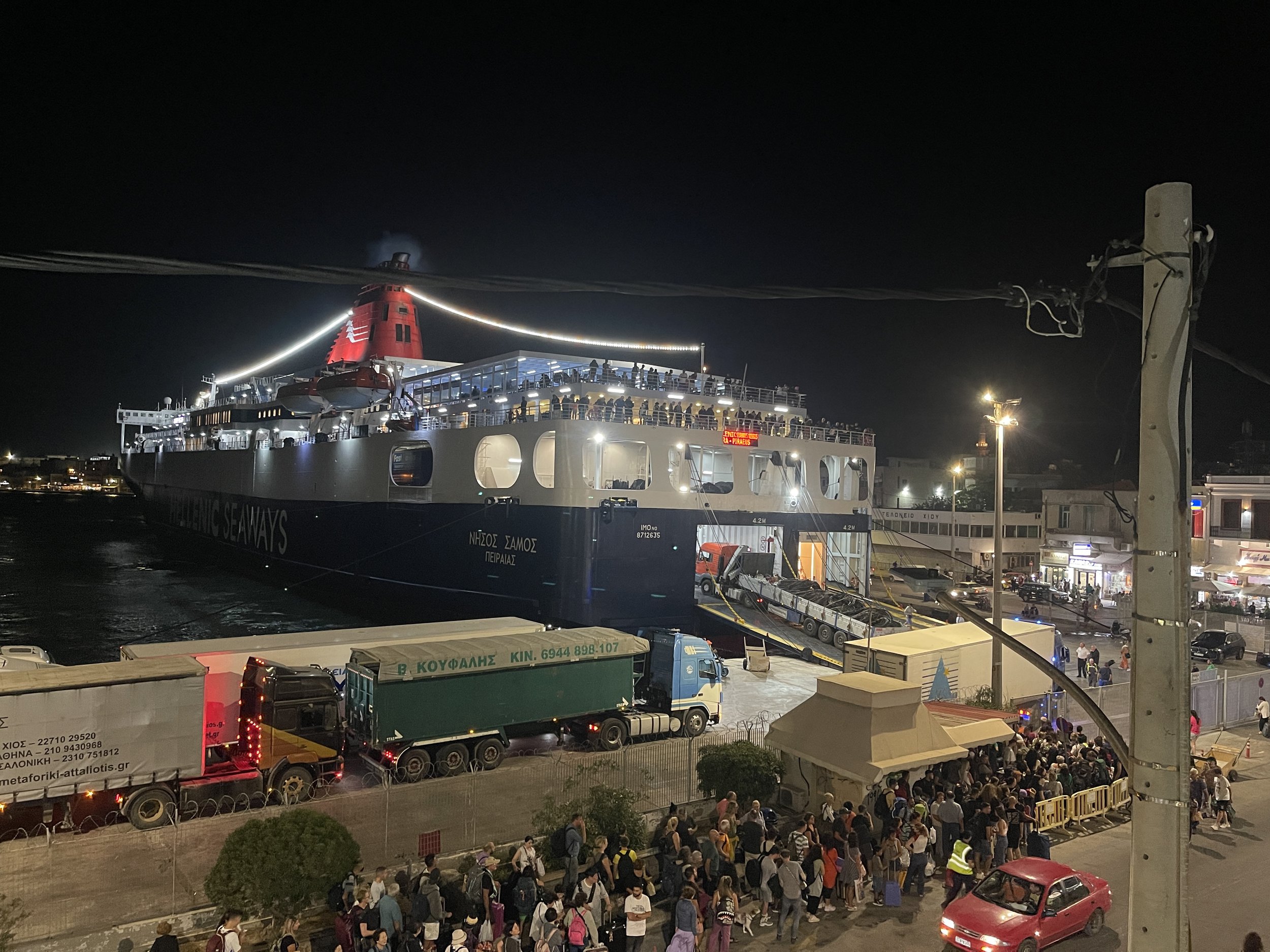
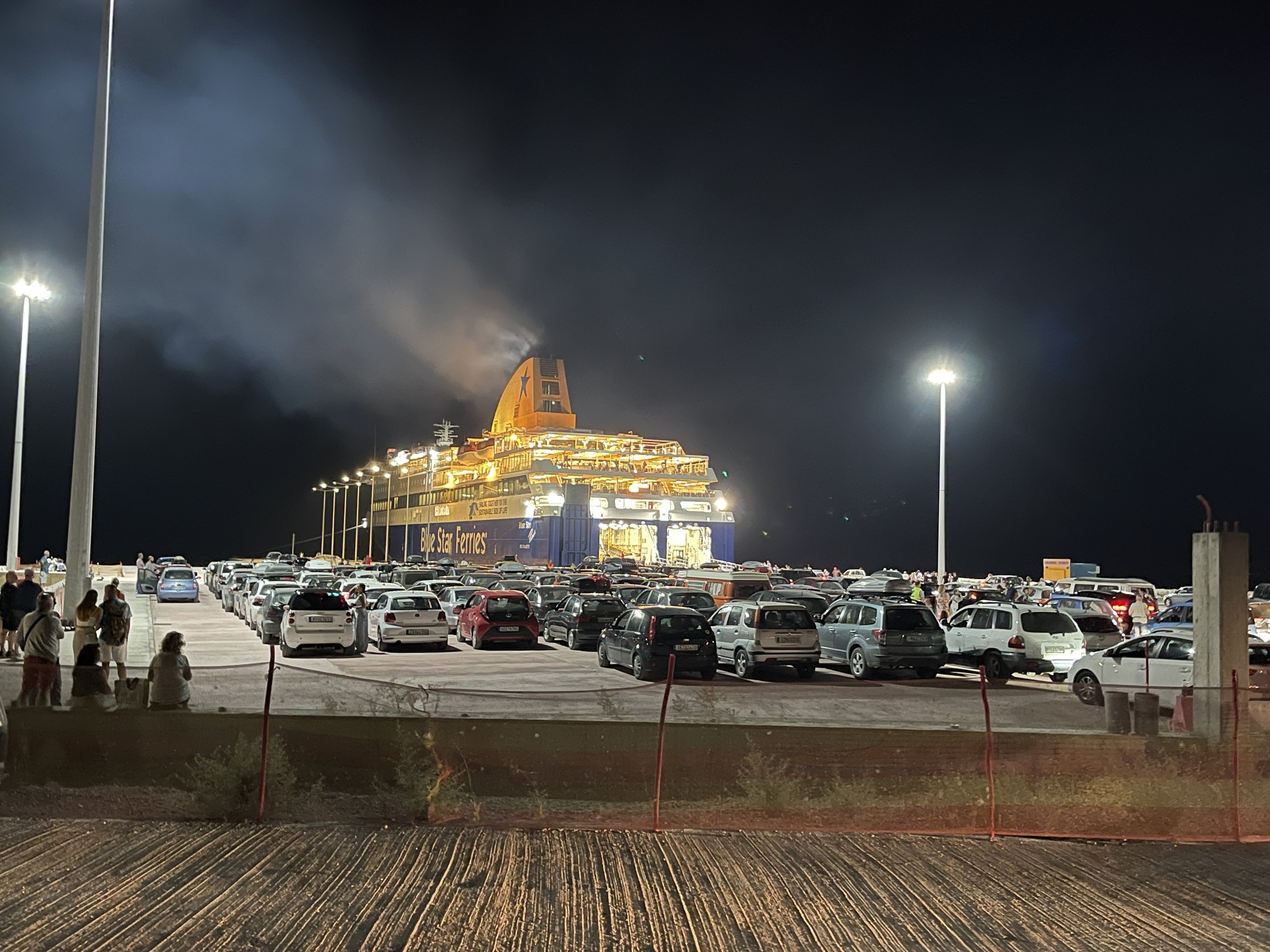
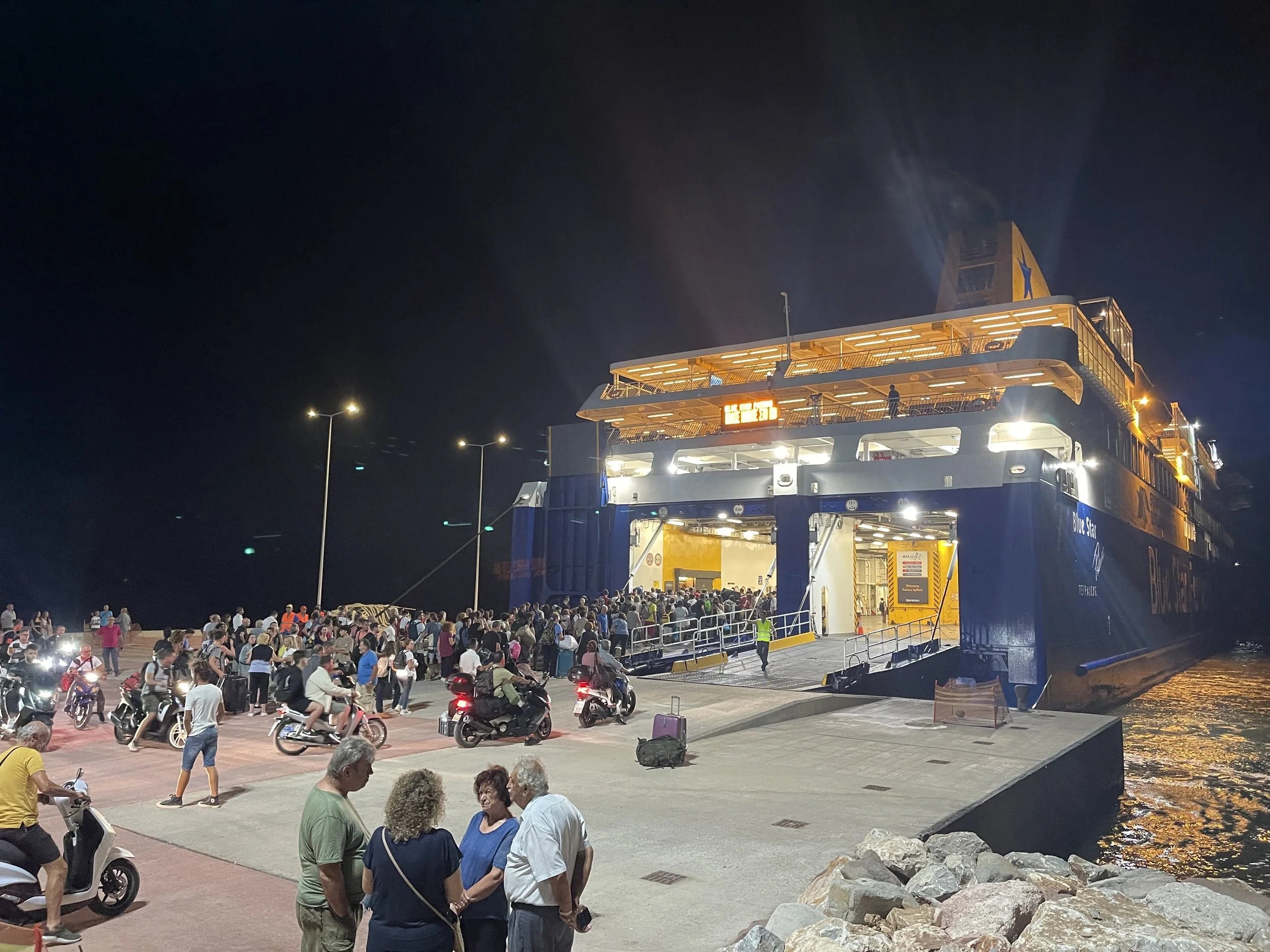
Arrive at the port 30 to 45 minutes before departure
Peak Season can be very busy and crowded at the port waiting to embark, many say that it’s “organised chaos” but somehow it all works efficiently and quickly with the experienced port staff.
Vehicles board first, then foot passengers
Seating depends on your ticket class - the numbered seating can be confusing, but there’s always plenty of friendly staff to assist you to find your seat.
Outdoor deck seating is not reserved/numbered and is first-come, first serve. This is a great location for those people travelling with pets.
Announcements on board are generally made in both Greek and English.
Weather, Wind and Delays
Summer meltemi winds can affect ferry schedules, particularly high-speed ferries.
Delays and cancellations do happen, which can then affect accommodation/tours at your destination (important to have travel insurance)
Slower ferries are more reliable in the wind
Avoid booking international flights on the same day as a ferry departure/arrival wherever possible, as delays will impact your ability to make your flight.
Island Hopping the Smart Way
Good ferry planning is not about cramming in as many islands as possible. It is about the flow.
Group islands within the same region
Avoid unnecessary returns to Athens
Allow buffer time between ferry days
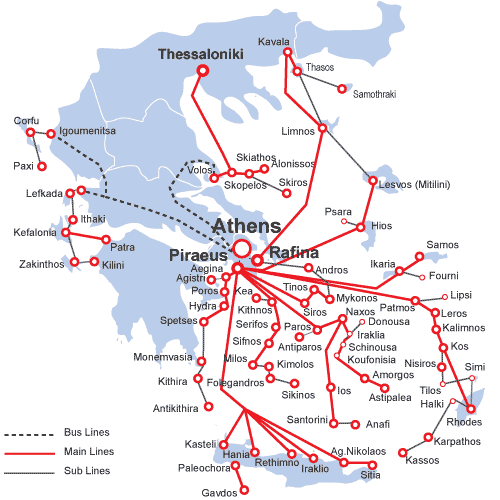
This is where thoughtful itinerary design really shines, and a travel advisor with lots of Greece knowledge (that’s me!) can help you with a seamless, stress free trip.
Should You Book Ferries Yourself?
You absolutely can, but ferry planning becomes complex when:
Visiting multiple islands
Balancing ferry types and schedules
Working around wind conditions
Coordinating ferries with flights and accommodation
A travel advisor brings clarity, backup plans and local knowledge, so your trip runs smoothly even when conditions change.
Final Thoughts
Ferry travel is one of the most memorable parts of a Greek island holiday. When planned well, it feels effortless and scenic, rather than stressful.
The journey becomes part of the holiday magic ✨